What Makes Arabic Perfumes Different?

The difference often enters the room before the bottle does.
It is in the faint smoke caught by a sleeve, the perfume oil placed precisely at the wrist, and the eau de parfum added only after both have settled. What smells like one seamless signature may actually be three forms of fragrance moving at three
different speeds.
That is a more useful beginning than saying every Arabic perfume is “strong, oily and full of oud.” Some are. Many are not.
What makes the tradition distinctive is its material vocabulary, formats, layering
and cultural purpose. The compositions can be rich and persistent, but also airy,
floral, musky or modern.
The Short Answer
Arabic perfumes often differ through their use of oud, musk, rose, saffron, incense, warm woods and amber-like accords; their continued relationship with concentrated oils and bakhoor; and a culture of layering fragrance on skin,
clothing and in the surrounding space.
They are not universally stronger than other perfumes, and “Arabic” is not a
concentration label. The category contains oils, eau de parfums, extraits, fresh sprays and many styles between them.
For the full history and material guide, see our complete guide to Arabic perfumes.
A Different Relationship With Fragrance
In much of the Gulf, scent belongs to the architecture of receiving someone.
Bakhoor may perfume a majlis before guests arrive. Rosewater may be offered. A person may scent clothing as carefully as skin.
Historical evidence gives this custom a long perspective. The Metropolitan
Museum of Art describes how guests in an eighteenth-century Damascus reception room could be sprinkled with perfume while incense burned.
Modern Dubai translates that instinct rather than preserving it unchanged. A
contemporary Middle Eastern perfume may use a global palette and feel at home beside tailoring or office wear.
The Materials Have More Than One Face
Oud Can Be Polished, Smoky or Almost Floral
Oud is associated so closely with Arabian perfumery that it can overshadow the rest of the category. It comes from resin-rich agarwood and may smell earthy, woody, leathery, smoky, sweet or animalic.
In modern perfume, the note may come from natural oud oil, a composed accord or both. Rose can make it plush; saffron dry and leathery; citrus more approachable.
Musk Can Whisper
Musk often creates softness and continuity. It may suggest cotton, warm skin, powder, cream or an animalic shadow. Most contemporary perfumery uses synthetic musks and other materials with musky effects rather than historical animal musk.
Because musk often stays close, a musky Arabic fragrance can last without
projecting loudly. This is one reason longevity and strength should not be treated as the same thing.
Rose, Incense, Saffron and Amber Build Contrast
Rose brings colour and lift to woods. Frankincense can feel mineral or cool as well as smoky. Saffron may suggest warm metal, hay or leather. Amber-like accords add balsamic warmth, often through effects recalling labdanum, benzoin and vanilla.
The signature richness often comes from contrast: flowers against smoke, or
sweetness held by dry woods.
Oil, Spray and Smoke Behave Differently
Concentrated perfume oil is applied in a small amount and usually stays closer to
the body. An alcohol-based spray lifts more readily into the air, which can create greater initial diffusion. Bakhoor scents the environment and may cling to hair or fabric.
None is inherently superior. Each controls distance differently.
This explains why layering is so central to the regional experience. Smoke gives
atmosphere. Oil creates an intimate foundation. Spray adds movement and
projection. When the materials are related, the result develops in stages rather than smelling flat.
Begin carefully if you want to try it. Choose a quiet musk or unscented moisturiser beneath one eau de parfum before adding bakhoor or a second fragrance. Layering should reveal more character, not simply more volume.
Are Arabic Perfumes More Concentrated?
The category includes many perfume oils and extraits, but no rule requires an
Arabic fragrance to have a higher concentration.
An eau de parfum from an Arabian house is still an eau de parfum. Its performance depends on the formula and materials as well as the concentration range. A fresh citrus composition may move faster than a woody-spicy one at the same labelled
strength.
Oil also changes projection. Because it lacks the same alcohol-driven lift as a spray, it may feel dense at the point of application yet more intimate in the air.
Ask what format you are buying, how it is meant to be applied and which notes
form the base. Those answers are more reliable than assuming “Arabic” means
maximal strength.
Why Do Many Arabic Perfumes Seem to Last Longer?
Many are structured around woods, musks, resins, vanilla, leather, tobacco and amber-like materials that can remain perceptible after brighter notes fade.
Concentrated formats and layering may add persistence as well.
Yet longevity still varies with skin, climate, dosage and composition. Dubai heat can make an opening bloom quickly and project more strongly, while air conditioning may slow the dry-down. Dry skin can make a fragrance seem to
disappear sooner than moisturised skin.
Most importantly, the base may still be present after you stop noticing it. Your
nose adapts to familiar smells. Before reapplying, step into fresh air or ask
someone you trust.
Luxury Is Expressed Through Ritual and Object
The appeal of an Arabic fragrance is not only performance. It may lie in how the
perfume develops, how it becomes part of dressing and how the bottle occupies a room.
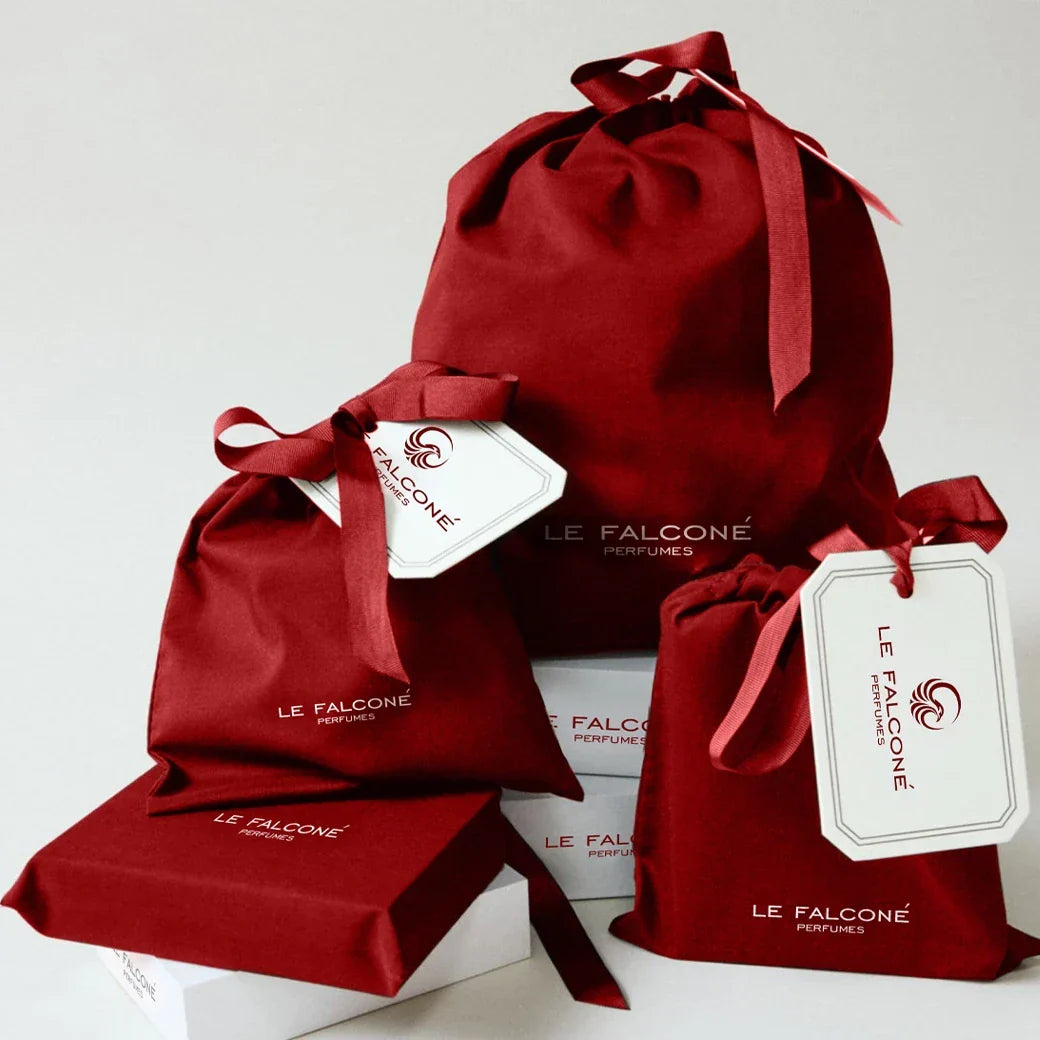
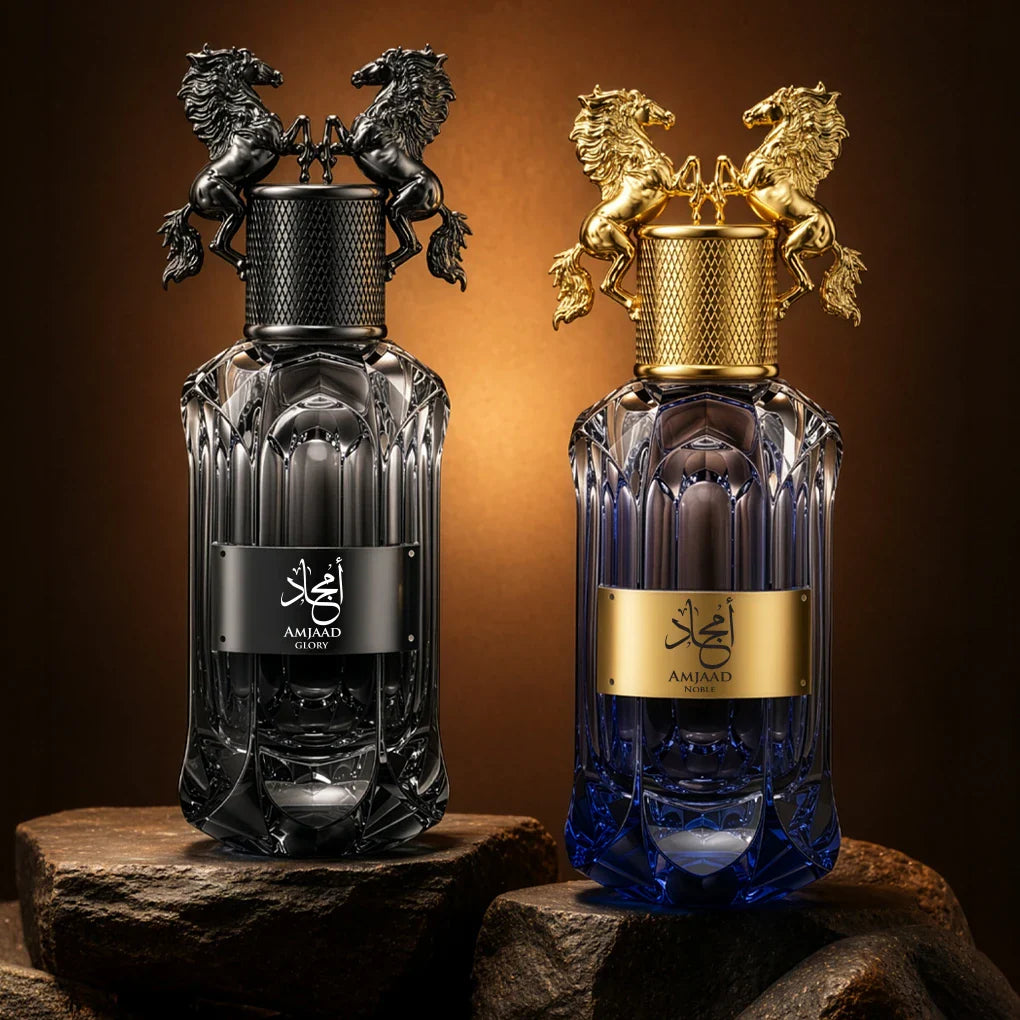
Le Falconé takes its visual signature from the falcon, a symbol of majesty, precision and freedom. Its sculpted bottles turn fragrance into an object with presence before the atomiser is pressed. That craftsmanship supports the scent rather than replacing it.
The more enduring luxury is attention. Choosing the right fragrance for a guest,
scenting a room before a gathering or allowing a perfume to settle before entering speaks more quietly than an excess of adjectives.
A Modern Arabic Perfume Does Not Need to Smell Traditional
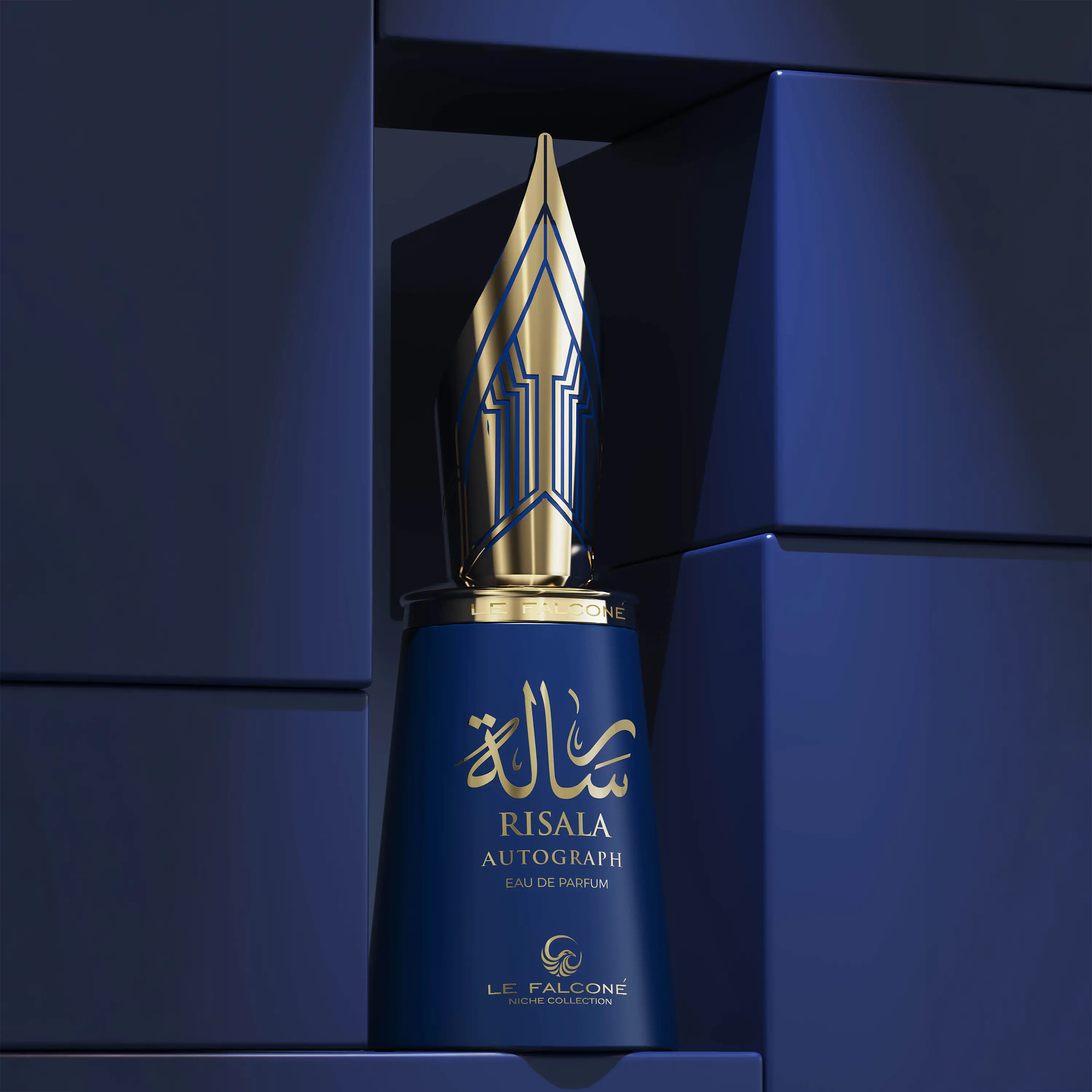
Risala Autograph is a useful example. Lime, apple, blackcurrant, lemon, thyme and pink pepper create a vivid opening. Orange blossom, coconut, labdanum, oakmoss and lily lead into a base of juniper berry, moss, ambergris, amber, mate, leather, cedarwood and tonka bean.
There is no verified oud note in that structure, yet its contrast, depth and
distinctive dry-down belong naturally within a Dubai-born fragrance house.


Le Falcone
رسالة - أوتوجراف (للجنسين) – 100 مل
Mirsaal Valentine takes an even fresher route through mint, lemon, apple, herbs,
lavender, rosemary, jasmine, lemon verbena and musk. It shows that modern
Arabian fragrance can be bright enough for daytime while retaining an aromatic
signature.
If you prefer warmth, Muharib Alpha moves from lavender, mint and cinnamon
into vanilla, benzoin, nutmeg and cardamom, then honey, tonka bean and tobacco.
These are not rankings. They are three different answers to the same regional idea: a fragrance should carry character.


Le Falcone
مرسال - فالنتاين (للجنسين) – 100 مل
How to Choose Your First Arabic Perfume
Start with a family you already understand.
● If you enjoy clean fragrances, look for citrus, aromatics and soft musk.
● If you prefer warmth, explore amber-like accords, vanilla, benzoin and
gentle spice.
● If you want depth, consider woods, leather, tobacco or an oud composition.
● If sweetness appeals to you, try a gourmand balanced by musk, spice or
woods.
Test it on your skin, then wait. The opening may be the least representative part of a layered perfume. Notice what remains after one hour and again after several.
A Discovery Set lets you compare styles through a normal UAE day rather than
making the decision under store lighting and air conditioning.
Frequently Asked Questions
No. Oud is important to the tradition, but Arabic perfumes may be floral, musky,
fruity, aromatic, gourmand or woody without containing oud.
Some are concentrated oils or attars. Many others are alcohol-based eau de
parfums or extraits. Check the product format instead of assuming from origin.
Some use concentrated formats, rich base materials or layering that creates
substantial presence. Others are deliberately restrained. Formula and application determine strength.
Yes. Choose a fresh, woody or musky composition with controlled projection and
apply lightly. Test it through heat and air conditioning before deciding the
amount.
Bakhoor is aromatic material burned to scent a space and often clothing or hair.
Perfume oil and spray fragrance are applied directly to the body or, where suitable,
fabric.
Difference Without a Stereotype
Arabic perfumery feels different when material, ritual and intention meet. Oud may provide shadow. Musk may create intimacy. Incense may prepare the room. A bright modern spray may carry the story into the working day.
Look beyond strength, test beyond the first minutes and choose the composition that feels at home in your life.
Discover Le Falconé Arabic fragrances and explore the many ways heritage can be
worn now.