Complete Guide to Arabic Perfumes

In an Arab home, fragrance is rarely only the last thing applied before leaving.
It may already be in the room. Oud chips warm over charcoal. Bakhoor settles into
a curtain. Rosewater appears before coffee. A trace of musk remains on a cuff after the guest has gone. Scent belongs to welcome, preparation, prayer, celebration and memory, often before it belongs to a bottle.
That is the first thing to understand about Arabic perfumes. They are not defined by one ingredient, one concentration or one dramatic style. The phrase holds an entire fragrance culture: concentrated oils and contemporary sprays, luminous florals and dark woods, intimate musks and compositions that leave a fuller trail.
Some are built around oud. Many are not. The way in is to leave stereotypes at the door and learn how its materials, rituals and modern forms fit together.
This guide will help you do exactly that, from the incense routes of ancient Arabia to choosing an Arabic fragrance for an ordinary day in Dubai.
What Are Arabic Perfumes?
Arabic perfumes are fragrances shaped by the olfactory traditions of Arabia and
the wider Middle East. They are often associated with oud, musk, amber-like
accords, rose, saffron, incense, sandalwood and spices, but no single note is compulsory.
The category includes several formats:
- Alcohol-based sprays such as eau de parfum and extrait de parfum
- Concentrated perfume oils, often applied with a dabber
- Attars, a term used in different ways across regions for distilled or
compounded perfume oils - Bakhoor and other scented materials burned to perfume a space, clothing or hair
- Layered rituals that combine smoke, oil and spray fragrance
This distinction matters. An Arabic perfume is not automatically an oil, and an oil is not automatically Arabic. Geography, creative tradition, material vocabulary and the way fragrance is worn all contribute to the identity.
Modern houses in Dubai often move comfortably between heritage and
contemporary perfumery. Their structures may be modern, yet their attention to depth, hospitality and personal signature remains connected to the region.
A Brief History of Arabian Fragrance Culture
Long before perfume counters, scented materials travelled through Arabia as
medicine, ritual material, luxury commodity and household pleasure.
The Metropolitan Museum of Art notes that frankincense and myrrh from southern Arabia were valued across the ancient world for incense, perfume, cosmetics,vmedicine and ceremony. Control of the incense trade helped southwestern Arabian kingdoms build wealth from the middle of the first millennium BCE.
Fragrance continued to belong to hospitality as well as commerce. The Met records that guests in an eighteenth-century Syrian reception room could be sprinkled with perfume while incense burned nearby. Across the Gulf today, scent can still prepare a room for company or complete the ritual of receiving a guest.
Dubai gives this history a contemporary setting. It is a city where bakhoor and
extrait de parfum share the same dressing table, and where regional tastes meet perfumers, materials and customers from around the world. Le Falconé was born in that exchange, bridging Arabian heritage and modern cosmopolitan elegance through fragrances conceived around character rather than convention.
The Materials Commonly Associated With Arabic Perfumery
An ingredient list does not tell you exactly how a perfume will smell. Each material has several faces, and the surrounding notes decide which face appears.
Oud
Oud is the fragrant, resin-rich wood formed in certain agarwood trees. The term may refer to the wood, its distilled oil or an olfactory accord designed to suggest its character.
Depending on its treatment and composition, oud can smell woody, smoky, leathery, earthy, medicinal, sweet or softly animalic. Rejecting it after one encounter can be rather like rejecting all tea after one very strong cup.
In a luxury Arabic perfume, oud may lead the composition or sit quietly beneath
rose, saffron, amber-like materials, vanilla or other woods. Natural agarwood is rare and subject to conservation and trade controls. Many modern perfumes
therefore use an oud accord, a carefully composed effect rather than natural oud
oil. Neither approach alone determines whether the finished fragrance is beautiful.
Musk
Musk gives perfume texture more than a single obvious smell. It may feel clean,
cotton-soft, warm, creamy, powdery, skin-like or subtly animalic.
Historical musk came from musk deer. Contemporary perfumery relies overwhelmingly on synthetic musks and plant-derived materials with musky
facets. For example, the US National Library of Medicine's PubChem record for galaxolide identifies it as a synthetic musk fragrance used in perfumes and other scented products.
Modern musks can create diffusion, soften sharp edges or make florals feel freshly laundered. In Arabic perfumery, musk is often the quiet continuity beneath brighter or richer notes.
Amber and Amber-Like Accords
In a perfume note list, amber usually does not mean a piece of fossilised tree resin. It describes a warm accord, often constructed from materials or effects recalling labdanum, benzoin, vanilla and balsamic resins.
Amber can feel golden, sweet, resinous, powdery or smoky. Ambergris is different: a distinct material or recreated effect with marine, mineral and animalic facets. Treat the two as separate ideas when reading notes.
Rose and White Florals
Rose is one of the great partners of oud because its brightness can open the darker grain of the wood. Yet rose in Arabic perfume is not confined to one familiar pairing. It may be green and dewy, plush and jammy, peppered with spice or polished by musk.
Jasmine, orange blossom and neroli can bring radiance to resins, soften leather or bridge citrus and woods.
Saffron and Spices
Saffron can suggest leather, warm metal, dry hay or a slightly medicinal sweetness. Cardamom may feel cool and aromatic. Cinnamon brings warmth, while pink pepper can feel rosy and sparkling.
Spice is rarely there simply to make a fragrance “strong.” Used well, it creates
movement between the opening and the base.
Frankincense, Myrrh and Balsamic Resins
Frankincense can feel cool, mineral, citrus-like or smoky. Myrrh is often darker, bittersweet and balsamic. Benzoin may recall vanilla, polished wood or warm resin.
These materials connect contemporary perfumery to a much older vocabulary, but can be handled in thoroughly modern ways. Woods then provide the frame: sandalwood can be creamy, cedarwood dry and structured, while patchouli may feel earthy, leafy or polished.
Oud, Attar and Bakhoor Are Not the Same Thing
These terms are often placed together, but they describe different things.
Oud is a material or scent profile. It may appear in an oil, a spray or incense.
Attar generally refers to a concentrated perfume oil, although traditions and
commercial usage vary. An attar can smell of rose, musk, amber, citrus, flowers or woods without containing oud.
Bakhoor is burned aromatic material, commonly wood chips or a prepared blend scented with oils, resins and other materials. It perfumes the surrounding air and may scent hair or clothing through smoke. It is not applied to skin like eau de parfum.
Choose oil for intimate, precise application; eau de parfum or extrait for spray diffusion; and bakhoor when scenting a room is part of hospitality.
Why Arabic Perfumes Often Feel Rich and Layered
The answer is composition, not nationality alone.
Many regional fragrances give substantial space to woods, musks, resins, spices and amber-like notes. Their bases may continue changing for hours rather than
simply becoming fainter.
Layering also shapes the experience. In many Middle Eastern fragrance rituals, a
person may scent clothing with bakhoor, apply a perfume oil and finish with a
spray. Each has a different rate of diffusion, creating depth that no single product could reproduce in quite the same way.
None of this means every Arabic perfume is heavy. The category is broad enough to include restraint.
Are Arabic Perfumes More Concentrated?
Sometimes, but not by definition.
Arabic perfumery includes concentrated oils and extraits, which may offer a high
proportion of aromatic material. It also includes eau de parfums, lighter sprays and home fragrance. The words “Arabic perfume” do not disclose a percentage.
Concentration labels are ranges rather than a single global formula. Higher
concentration may increase richness or wear time, but does not guarantee louder projection. Oil often sits closer, while alcohol helps a spray diffuse. For a direct comparison, read eau de parfum vs extrait de parfum.
Do Arabic Perfumes Last Longer?
Many do have a reputation for substantial wear, particularly compositions built around slower-developing woods, musks, resins, leather, vanilla or amber-like notes. Yet origin and price cannot guarantee longevity.
Wear time depends on:
● The complete formula and concentration
● The volatility of its materials
● Your skin condition and temperature
● Outdoor heat, humidity and air conditioning
● The amount and location of application
● Whether the fragrance is applied to skin, hair or suitable fabric
A citrus-led Arabic eau de parfum may become quiet sooner than a resinous one. A musky fragrance may last for hours but remain very close. A powerful opening may project widely and still fade before a softer base.
Judge longevity only after a full wear. Our guide to why luxury perfumes last
longer explains the mechanisms in more detail.
How to Choose an Arabic Perfume
Begin With Mood, Not Gender
Do you want brightness, warmth, smoke, softness, sweetness or polished woods?
This question narrows the field more effectively than deciding that a note is
masculine or feminine.
Many Arabic compositions are worn across gender categories. Rose can become dry beside leather. Vanilla can feel shadowed by tobacco. Saffron can sharpen a floral accord. Let the complete structure decide.
Decide How Much Presence You Enjoy
Projection and longevity are separate. For conversation distance, look for soft
musk, smooth woods or a balanced floral base. For a more ceremonial trail, explore richer amber-like, spicy or resinous structures.
Match the Composition to the Occasion
For daytime, consider citrus, aromatics, clean florals, dry woods and gentle musk. For evenings, weddings and formal gatherings, warmer spices, leather, tobacco, amber-like accords and gourmand notes may feel more fitting.
There is no seasonal law. Dubai's heat simply changes the way a fragrance lifts
from skin. Apply rich perfumes with restraint outdoors, then notice how they
settle in air conditioning.
Test the Dry-Down
Paper is useful for eliminating options. Skin is where the decision belongs. Wear
one fragrance at a time and ask whether you enjoy the base, not only the entrance.
If possible, use a Discovery Set to compare fragrances through your real routine before choosing a full bottle.


Le Falcone
هيبة رويال – 100 مل


Le Falcone
هيبة رويال – 100 مل
Exploring Arabic Fragrance Through Le Falconé
Le Falconé's collections are built as crafted concepts. Rather than reducing Arabic
perfumery to a single oud stereotype, they move through freshness, florals, spice,
musk, woods, gourmand warmth and more contemplative bases.
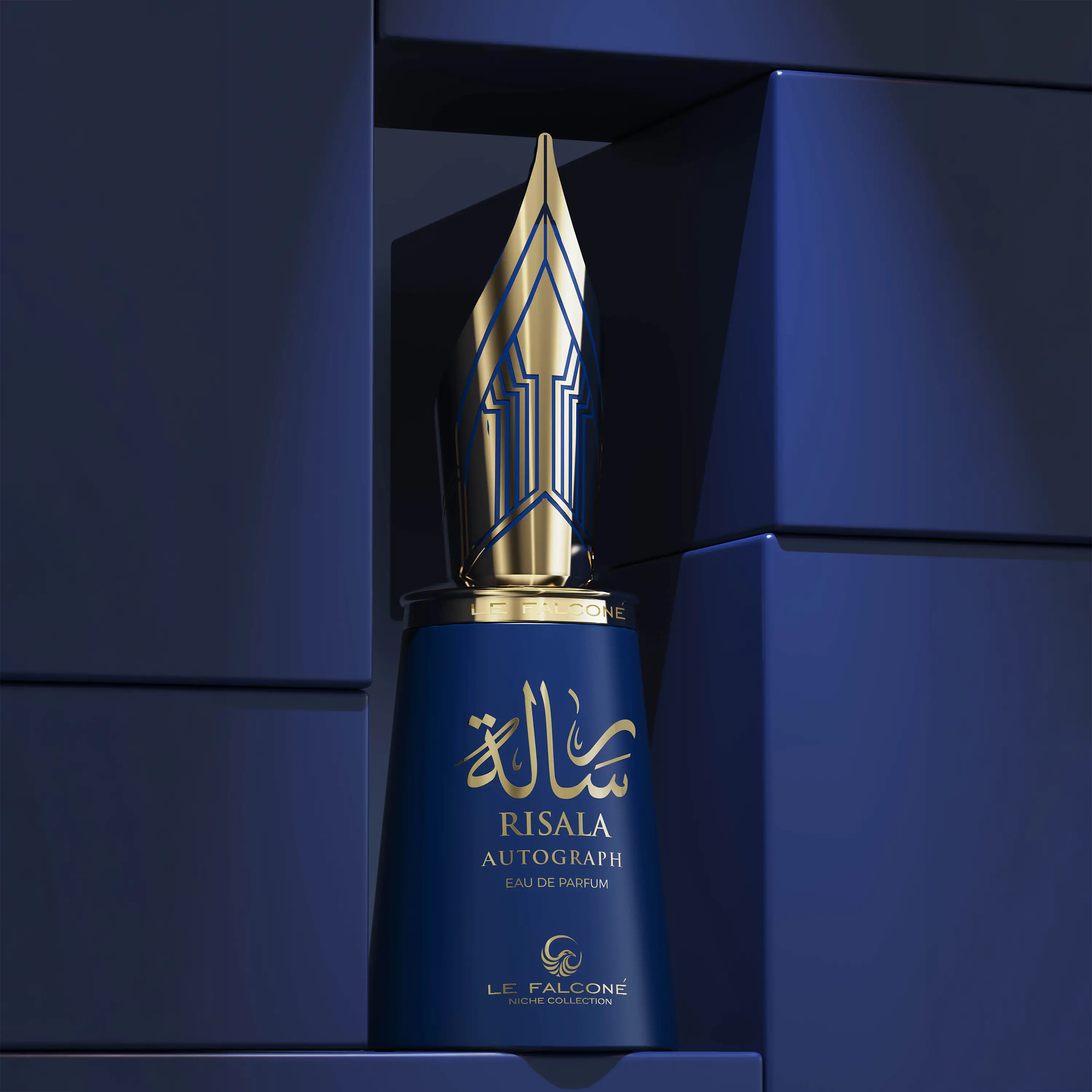
Risala Autograph: Brightness Into a Woody-Leather Base
Risala Autograph begins with lime, apple, blackcurrant, lemon, thyme and pink pepper. Orange blossom, coconut, labdanum, oakmoss and lily give the heart contrast before the composition settles into juniper berry, moss, ambergris, amber, mate, leather, cedarwood and tonka bean.
It is a useful example of modern Arabic fragrance language. The opening is
energetic rather than traditionally “dark,” while the base carries the depth and
signature the region often prizes.


Le Falcone
رسالة - أوتوجراف (للجنسين) – 100 مل
Risala Forever: A Gourmand Interpretation
Risala Forever takes a sweeter route through caramel, buttercream, spice, baked
accords, vanilla, coconut and musk. Choose it if your idea of warmth is comforting
rather than smoky.


Le Falcone
رسالة - فوريفر (للجنسين) - 100 مل
Muharib Alpha: Spice, Tobacco and Extrait Depth
Muharib Alpha is an extrait de parfum with lavender, mint and cinnamon above
vanilla, benzoin, nutmeg and cardamom. Honey, tonka bean and tobacco form its
base.
It suits someone drawn to a fuller aromatic-spicy profile and illustrates why
concentration should be considered alongside the material structure.


Le Falcone
محارب - ألفا (للجنسين) – 85 مل
Mirsaal Valentine: The Lighter Side of the Tradition
Mirsaal Valentine opens with mint, lemon, apple, blackcurrant, basil and thyme,
then moves through lavender, rosemary and jasmine to lemon verbena and musk.
Its fresh construction is a reminder that an Arabian house need not make every
fragrance dense.


Le Falcone
مرسال - فالنتاين (للجنسين) – 100 مل
How to Wear Arabic Perfume in the UAE
Apply to clean, moisturised skin without rubbing. Start lightly, particularly with an
extrait before outdoor heat. Test delicate fabric before misting clothing. Build
layers slowly, then store every format upright, tightly closed and away from direct
sunlight, bathrooms and parked cars.
Common Misconceptions About Arabic Perfumes
Every Arabic Perfume Contains Oud
It does not. Arabic perfumery includes florals, gourmands, musks, aromatics,
fruits, leathers and many kinds of woods.
Arabic Perfume Is Always Strong
Some compositions project powerfully. Others are intimate. Strength depends on
formula, format and application, not a passport.
Natural Ingredients Are Always Better
Natural and synthetic materials both belong to modern perfumery. Synthetics can provide new effects and alternatives to scarce or animal-derived materials. Quality lies in composition and responsible use. The IFRA Standards provide an industry risk-management framework.
More Expensive Means Longer Lasting
Price may reflect design, materials, production, packaging, distribution and
creative positioning. It does not control evaporation. A perfume should earn its
place through character and the pleasure of wearing it, not an assumed number of hours.
Frequently Asked Questions
There is no absolute divide. Arabic perfumery often gives greater cultural
prominence to oils, incense, layering, oud, musk, resins and warm woods, while
contemporary houses everywhere exchange materials and techniques. Many
modern Arabic fragrances use familiar spray formats and international olfactory
structures.
Begin with a balanced eau de parfum in a family you already enjoy. Fresh aromatic,
floral-musky or softly woody compositions can offer an accessible introduction
before you explore more pronounced oud, smoke or resin.
Yes. Choose the profile and application for your setting. Fresh, musky and woody
fragrances can work beautifully by day, while richer gourmand, spicy or resinous
styles may suit evenings.
No. Oud is a material or scent effect used in perfumery. An Arabic perfume may
contain oud, suggest oud through an accord or omit it entirely.
Many are presented as unisex, and note character changes through composition.
Test the perfume on your own skin rather than assigning a gender to oud, rose,
musk or spice.
Buy through the brand's own store or an authorised retailer, check the packaging
and product information, and be cautious of prices or claims that feel inconsistent
with the official listing. Our guide to buying authentic luxury perfumes in the UAE
covers the process in more detail.
A Tradition That Keeps Moving
Arabic perfumery has never been a museum piece. Its materials travelled. Its rituals adapted. Its modern houses now speak to people who may wear a citrus musk to work, a tobacco extrait to dinner and bakhoor when guests arrive.
What holds the tradition together is not a compulsory note. It is the belief that
fragrance carries meaning: for the wearer, for the room and for the people
welcomed into it.
Choose slowly. Smell beyond the opening. Let the perfume be as light or as rich as your life requires.
Explore the Le Falconé Arabic perfume collection and discover a composition
shaped by heritage, artistry and distinctive character.