Niche Perfume vs Designer Perfume: What Is the Difference?

A designer perfume often arrives with a familiar name. A niche perfume has to
introduce the name and the idea at the same time.
That difference changes the conversation at the counter. With a fashion house, you may already know the clothes, campaign or public image before smelling anything. With a fragrance-led maison, the scent itself usually carries more of the burden. It must explain why the house exists.
This does not make one category artistic and the other commercial. Both can
contain excellent perfumery, safe choices, daring choices and forgettable choices. Niche perfume is not a certificate of quality. Designer perfume is not shorthand for ordinary.
The real distinction lies in the house's centre of gravity, creative priorities,
distribution and the audience it chooses to serve. Once you understand those
differences, you can decide what deserves space on your skin rather than choosing by status alone.
The Short Answer
A designer fragrance is released by a brand whose wider business is commonly built around fashion, accessories, jewellery, cosmetics or another luxury category. The perfume extends that brand universe.
A niche fragrance usually comes from a house focused primarily on perfumery. It
may pursue a narrower concept, a less familiar scent profile or a more specialised audience, and its distribution may be more selective.
These are market and creative categories, not regulated grades. Niche does not guarantee natural ingredients, high concentration, longevity or rarity. Designer does not guarantee mass appeal, synthetic materials or low quality.
The finished fragrance deserves to be judged on composition, wear and personal meaning.
What Is a Niche Perfume?
A luxury niche perfume is generally created by a fragrance-centred house whose identity is built through scent. The collection may revolve around a place, material, memory, artistic discipline or abstract idea.
Because the brand does not need every release to translate a fashion campaign or reach the broadest possible audience, it may allow more creative specificity. That can mean an unusual opening, a challenging texture, a note that remains
deliberately imperfect or a dry-down that reveals itself slowly.
It can also mean something beautifully restrained. Niche should not be confused with strange for the sake of being strange. The freedom is to follow the concept wherever it leads, including towards clarity.
Le Falconé calls this approach Crafted Concepts. Each collection begins with an
idea and develops fragrance, character and sculpted bottle as parts of the same
expression. Born in Dubai, the house draws on the falcon and Arabian fragrance heritage without asking every composition to smell traditionally “Arabian.”
What Is a Designer Perfume?
A designer perfume is created under a house known principally for another luxury field, most often fashion. Fragrance allows the customer to enter that world at a different scale and in an invisible form.
Designer launches often have wider distribution and a brief that values immediate legibility, versatility and broad appeal. That does not make the perfumery simple. Creating distinction within a commercially wearable structure requires considerable skill.
Some designer fragrances are experimental, expensive and available only through private collections. Some niche fragrances are designed to be instantly likeable and widely distributed. The boundary has become less tidy as large groups acquire niche houses and designer brands create exclusive fragrance lines.
Treat the labels as useful context, not opposing camps.
Niche vs Designer Perfume: The Main Differences
1. The House's Primary Focus
For a niche house, perfume is usually the main language. Its reputation depends on the collection's olfactory identity, the perfumers it works with and the ideas it
turns into scent.
For a designer house, perfume exists within a larger brand world. Bottle, campaign and composition may translate codes already present in clothing, leather goods or jewellery.
Neither model determines beauty. It determines where the fragrance begins.
2. The Creative Brief
Designer perfumes often need to speak clearly to a larger audience and perform
across many markets. The opening may therefore be immediately recognisable,
and the structure may prioritise ease of wear.
Niche houses can address a narrower wearer. A concept may be allowed to remain smoky, mineral, austere, intensely floral or difficult to classify. That freedom can produce originality, but it can also produce work you respect without wanting to wear.
The useful question is not “Is it creative?” It is “Does its creative choice give me something worth returning to?”
3. Ingredients and Formula
Niche marketing often emphasises rare naturals or premium materials, while
designer marketing may speak more broadly about mood and image. In practice, both categories use natural materials, aroma molecules, isolates and accords.
Synthetic does not mean cheap or inferior. Modern aroma materials can create radiance, stability and effects that cannot be extracted from nature. They can also provide alternatives to scarce or animal-derived materials. Natural does not automatically mean safer, longer lasting or more sophisticated.
The IFRA Standards set an industry risk-management framework that may restrict, specify or prohibit certain fragrance materials based on scientific assessment. Responsible formulation matters across both categories.
Without a verified formula or sourcing statement, do not infer ingredient quality
from the niche label alone.
4. Scent Profile and Familiarity
Designer fragrances frequently offer a recognisable route into a family: a polished citrus aromatic, a modern floral, a warm amber gourmand or a fresh woody scent.
Niche compositions may focus on less familiar contrasts. A floral might retain a
green stem. A leather may feel mineral rather than smoky. A gourmand may suggest toasted grain instead of obvious sugar.
This can make sampling more important. The perfume may not explain itself in the
first minute, and that is sometimes the point.
5. Distribution and Availability
Designer fragrances are often sold through department stores, major beauty
retailers, airports and extensive online networks. That accessibility makes
comparison and repurchase straightforward.
Niche perfumes may be available through the house, selected boutiques or
specialist fragrance retailers. Controlled distribution can preserve context and
service, but it can make blind buying more tempting when there is no nearby
counter.
In the UAE, online access has made niche discovery easier. Even so, a Discovery Set remains the better first step when the composition is unfamiliar.
6. Price
Niche perfumes often cost more, but there is no single reason. Price may reflect materials, smaller production volumes, bottle engineering, packaging,
distribution, import costs, brand positioning and the complexity of building a fragrance-led house.
Designer pricing may benefit from scale, yet exclusive designer lines can cost more than many niche bottles. Price is therefore a weak category test.
Ask what you are receiving: a composition you love, a well-made object, thoughtful service and a bottle you will actually use. Expensive perfume left untouched is poor value. A considered fragrance worn for years can feel worthwhile at a higher initial price.
7. Exclusivity
Niche fragrance is often less commonly worn because it reaches a smaller
audience. That can help someone seeking an individual signature.
Still, no perfume is literally yours alone. A popular niche release can become
recognisable, while a carefully chosen designer fragrance may feel distinctive
because of how it develops on your skin and how rarely people around you wear it.
Individuality comes from fit, not obscurity for its own sake.
8. Longevity and Projection
Niche perfume does not automatically last longer. Designer perfume does not
automatically project more.
Performance depends on concentration, material volatility, formula, skin, climate
and dose. A niche citrus eau de parfum may soften sooner than a designer amber fragrance. An extrait may remain close despite a higher concentration. A musk can persist after you become unable to detect it yourself.
Our guide to why luxury perfumes last longer separates price from the
mechanisms that genuinely affect wear.
How to Tell Whether a Niche Perfume Is Well Madea
Ignore the category label for a moment and follow the perfume.
● Does the opening connect to the heart, even when the transition is
surprising?
● Does the base retain character, or collapse into a familiar blur? Are unusual
notes serving the idea?
● Does the fragrance feel balanced at the distance where you would actually
wear it?
Technical smoothness is not the only sign of quality. A perfumer may intentionally leave tension between bitter citrus and leather, or between a translucent floral and a dense base. The question is whether the tension feels authored.
Wear the perfume for a full day. A blotter can show structure, but skin reveals
comfort, projection and the part you will live with.
The Role of the Perfumer
Both designer and niche houses commission work from accomplished perfumers. The difference is often how visibly that authorship is presented and how much room the brief gives an individual idea.
Some niche houses name the perfumer prominently, while designer brands may
foreground the house image. Neither approach reveals the full creative brief.
Use the perfumer's name as a path for discovery, not a guarantee. If you enjoy the structure of one fragrance, exploring other work by the same nose can teach you more about your taste.
What “Rare ” Really Means
Rarity may refer to limited botanical yield, a particular extraction, specialised
craftsmanship or restricted distribution. Those are not the same thing.
Ask for specificity. Is the house naming an origin, process or material it can verify? Or is “rare” being used only to create atmosphere?
A beautiful accord made with available materials can be more original than an
expensive natural used without purpose.
Choosing Niche Perfume in the UAE
The UAE offers exceptional access to both regional and international fragrance
houses, but its climate makes local wear testing essential. Outdoor heat can make a spicy or amber-like perfume project more forcefully, while air conditioning may hold it closer.
Test through a commute, a meal and several hours indoors. A composition that feels balanced across those transitions is more useful than one judged only in the cool air of a boutique.
When Designer Perfume May Be the Better Choice
Choose designer when you value easy availability, a familiar scent family, broad
wearability or simple repurchasing across countries.
It may also be the right choice for a first fragrance. A clear, polished composition
helps you learn whether you enjoy citrus, woods, florals, musk or amber-like
warmth before exploring more specialised interpretations.
There is no virtue in forcing yourself to admire a challenging niche fragrance when a designer perfume gives you more pleasure.
When Niche Perfume May Be the Better Choice
Choose niche when you want fragrance to carry an idea as distinctly as a piece of design. You may enjoy slower development, less familiar combinations, smaller houses and the sense of meeting a brand through its perfumery rather than through advertising already known to you.
Niche is especially rewarding once you can identify what feels missing from more familiar fragrances. Perhaps you want a drier rose, a more aromatic gourmand or a woody fragrance without conventional sweetness. Specificity makes the search
useful.
A Dubai-Born Niche Perspective
Le Falconé places the falcon at the centre of its visual language, not as an
ornament alone, but as a symbol of precision, character and the freedom to take one's own direction. The sculpted bottles make that identity tangible.
The fragrances then interpret different concepts rather than repeating one house accord.
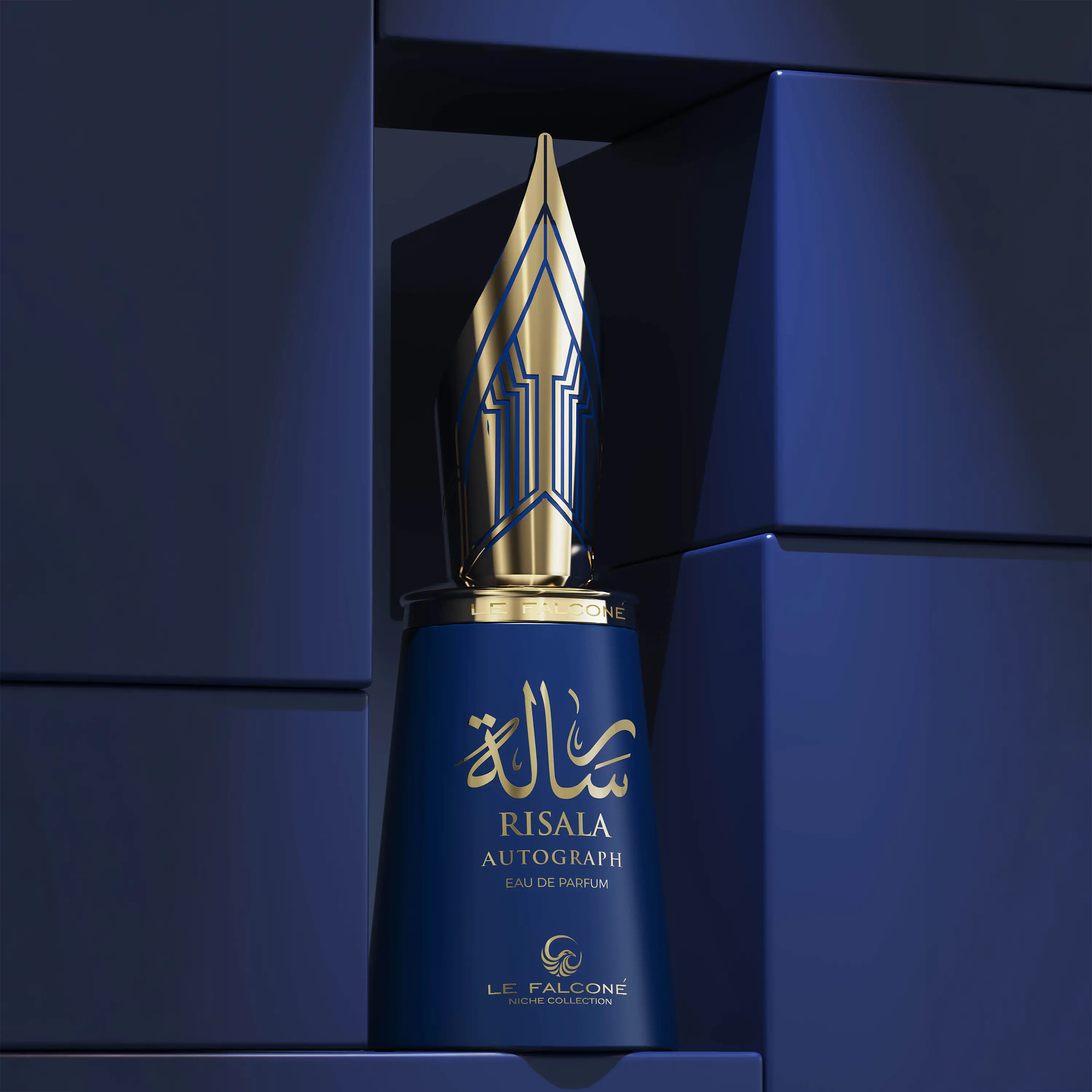
Risala Autograph: Individuality as a Signature
Risala Autograph moves from lime, apple, blackcurrant, lemon, thyme and pink pepper through orange blossom, coconut, labdanum, oakmoss and lily. Leather, cedarwood, moss, amber-like effects, mate and tonka deepen the base.
Its value lies in contrast: brightness that does not predict the darker finish.


Le Falcone
Risala Autograph
Juman Exclusive: Celebration Without Heaviness
Juman Exclusive opens with champagne rosé, litchi and pink pepper. Peach
blossom, rose and bitter almond shape the heart, followed by white musk and
woods.
It shows that a conceptual niche fragrance can feel joyful and immediately
wearable without losing a defined point of view.


Le Falcone
Juman Exclusive
Muharib Alpha: Concentration in Service of Character
Muharib Alpha is an extrait de parfum built around lavender, mint, cinnamon,
vanilla, benzoin, nutmeg, cardamom, honey, tonka bean and tobacco.
The concentration is part of the experience, but the aromatic-spicy structure is
what gives the perfume its identity.


Le Falcone
Muharib Alpha
Mirsaal Valentine: Freshness With an Aromatic Spine
Mirsaal Valentine combines mint, lemon, apple, blackcurrant, basil and thyme with
lavender, rosemary, jasmine, lemon verbena and musk.
It offers a niche route for someone who wants freshness to feel composed rather
than generic.


Le Falcone
Mirsaal Valentine
How to Choose Between Niche and Designer Perfume
Define What You Want to Feel
Begin with character: clean, dark, warm, bright, meditative, playful or formal.
Category comes later.
Set a Realistic Wearing Context
A fascinating fragrance that overwhelms your office may not be the right everyday bottle. A versatile perfume that feels too quiet for celebrations may still be an excellent daytime choice.
Sample on Skin
Wear no more than one or two serious candidates at a time. Check them after the opening, at midday and near the end of the day. Note comfort as well as longevity.
Calculate Value by Use
Divide the price by the number of wears you realistically expect, not the number of millilitres alone. A smaller bottle you finish may offer better value than a large
bottle bought for prestige.
Check the House, Not Only Reviews
Read the official note list, concentration, size, delivery terms and return policy.
Reviews can describe experience, but another person's skin and preferences are not evidence of how the perfume will behave on you.
Frequently Asked Questions
Not inherently. Niche usually describes a fragrance-focused house and a more
specialised market position. Quality varies in both categories.
Often, but not always. Exclusive designer lines can exceed niche pricing, and
independent houses exist across several price levels.
Some houses invest heavily in particular materials, but the niche label alone does
not verify quality, rarity or natural content. Judge verified information and the
finished composition.
Not automatically. Longevity depends on formula, concentration, skin, climate and
application. Price and category do not control evaporation.
Many are marketed without gender, but this is a house choice rather than a rule.
Notes themselves do not have a biological gender, and anyone can wear the
composition that suits them.
It can be, provided you sample first. A beginner does not need advanced
vocabulary to recognise pleasure, but should give an unfamiliar structure enough
time to develop.
Choose the Perfume, Not the Side
The most interesting fragrance collection can hold both categories without
contradiction. Designer perfumery can offer polish, memory and exceptional craft. Niche perfumery can offer specificity, surprise and a closer relationship with the house behind it.
The decision belongs on skin. If the perfume continues to interest you after the name, bottle and first impression have receded, it has answered the question that matters.
Discover Le Falconé niche fragrances and explore crafted concepts born in Dubai.